Pay in local currency or your own? The card machine question that costs you
- Written
- Read
- 3 min
- Words
- Tagio team
The most expensive button on a card machine abroad, and the one rule that avoids it.
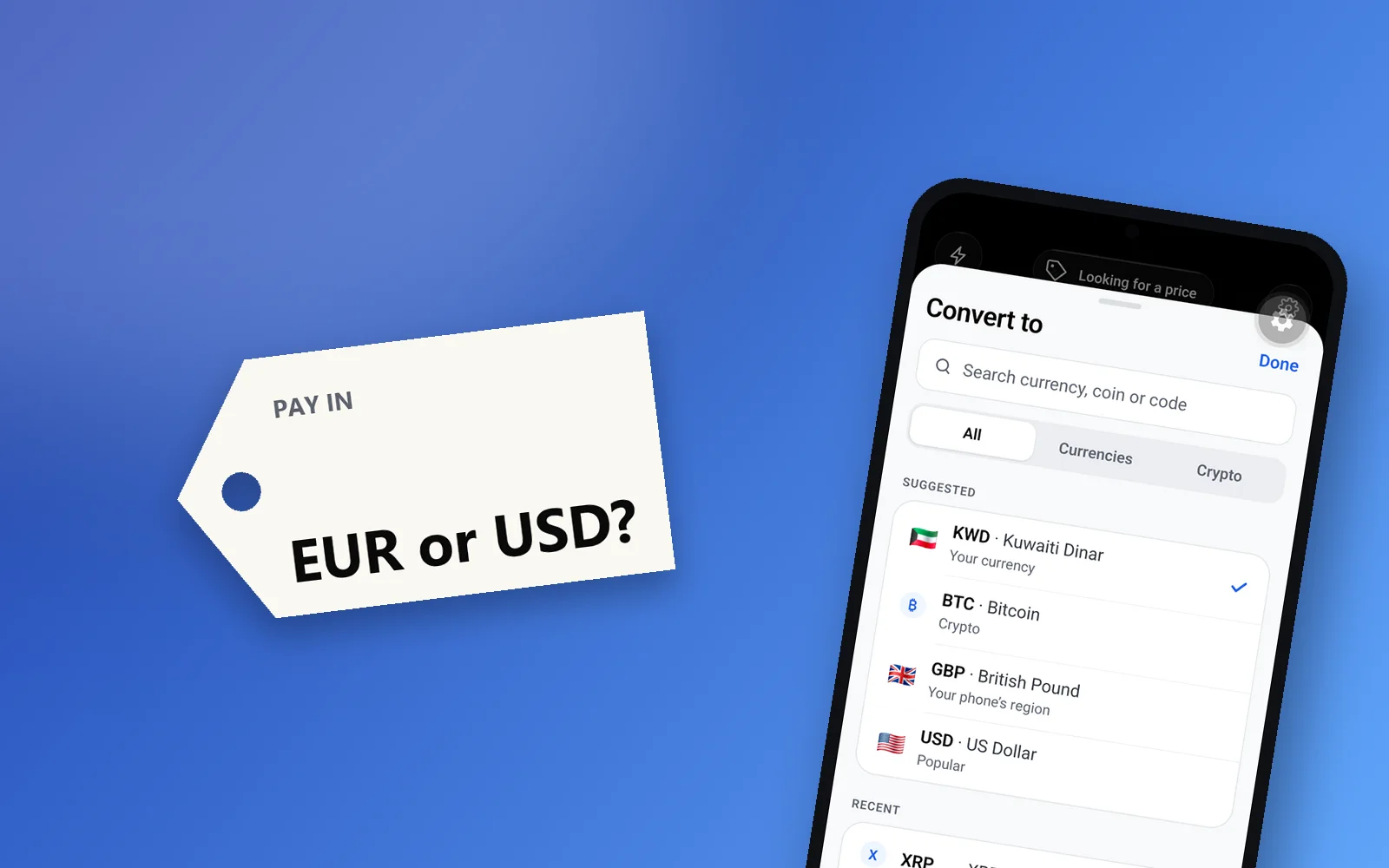
The card machine turns towards you and asks a simple question: pay in euros, or pay in your own currency? It looks like a courtesy. Most of the time it is the most expensive button on the screen.
What the question really is
That screen is called dynamic currency conversion, or DCC. If you choose your home currency, the shop's payment provider converts the price for you on the spot, at an exchange rate it sets itself. If you choose the local currency, the shop is paid in its own money and your card issuer does the conversion instead, at the card network's rate.
The two rates are not the same. The DCC rate usually includes a markup on top of the market rate, and that markup goes to the payment provider and often partly to the shop. That is why the option is offered so eagerly.
Why "pay in your own currency" usually costs more
DCC feels safer because you see a familiar number. But the familiar number is built on a worse rate. Card networks such as Visa and Mastercard convert at rates close to the wholesale market. Even if your bank adds a foreign transaction fee, the total is very often lower than the DCC markup.
There is a second, quieter cost: with DCC you lose the chance to compare. You are shown one number, in your currency, with no easy way to check what the rate was.
What the law says in Europe
Since April 2020, the EU's Regulation (EU) 2019/518 requires anyone offering currency conversion at a card terminal or cash machine in the EU to show the total conversion charge as a percentage markup over the latest euro reference rate from the European Central Bank, before you pay. Look for that percentage on the screen. If it is there, it tells you exactly how much extra you are being charged for the "convenience".
Outside the EU, there is often no such rule, and the screen may only show a rate and a total.
The same trick at cash machines
ATMs abroad ask a similar question, sometimes worded as "with conversion" or "without conversion", or as a "guaranteed rate". Choosing without conversion means you are charged in the local currency and your own bank converts it. The machine's operator may still charge a withdrawal fee, but you avoid its exchange rate markup.
A simple rule
- Always pay in the local currency. On a card terminal, choose the currency of the country you are in.
- At an ATM, decline the conversion. Pick "without conversion" or the local currency.
- Know your card. Check whether your card charges a foreign transaction fee. Many travel and digital bank cards charge none.
- If a shop converts without asking, you can ask for the charge to be redone in the local currency before you sign or approve it.
Knowing the price before the till
The till is the worst place to do currency maths: there is a queue, a card reader in your face and a decision to make in seconds. It is much easier if you already know what things cost in your money while you are still at the shelf.
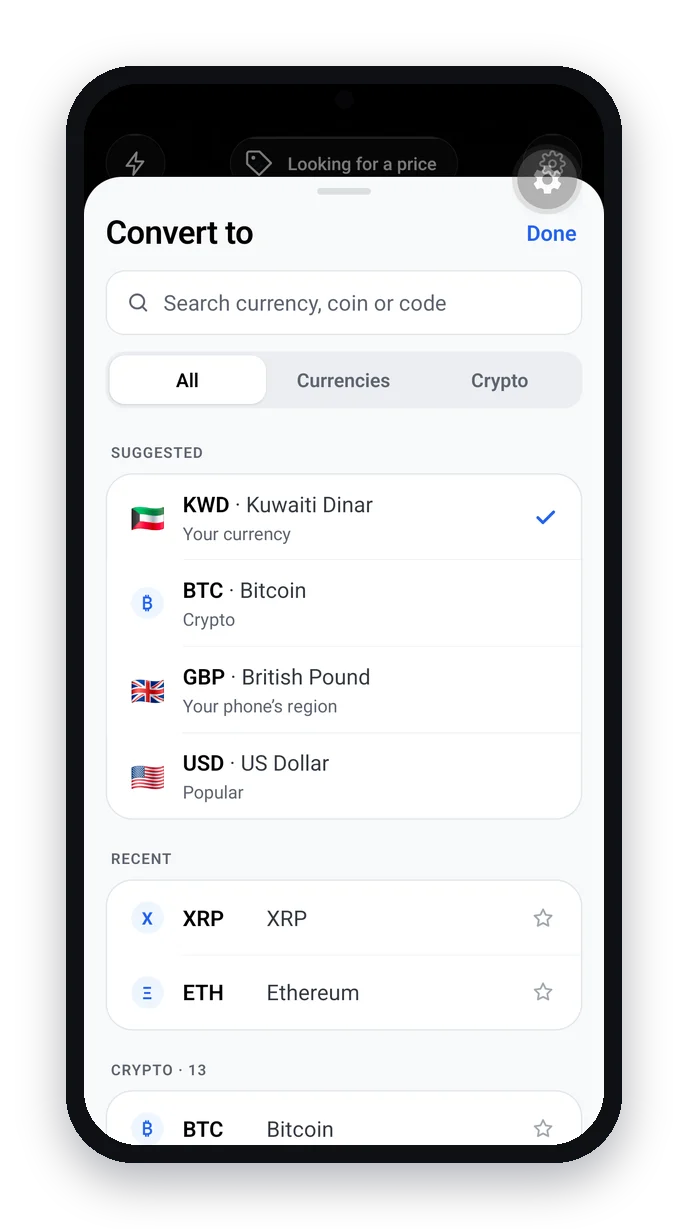
That is what Tagio is for. Point your phone at a price tag and it shows the price in your currency straight away, with the age of the rate it used. When you get to the till, you already know roughly what the total should be, and you can choose the local currency with confidence.
Key points
- "Pay in your own currency" is dynamic currency conversion, and its rate usually includes a markup.
- Paying in the local currency lets your card network convert at a rate close to the market.
- In the EU, the markup over the ECB reference rate must be shown before you pay.
- At ATMs, choose "without conversion".