How to convert currency in your head: five tricks that actually work
- Written
- Read
- 3 min
- Words
- Tagio team
You don't need the exact answer at the shelf. You need to know if it's a good price, fast.
You don't need an exact answer at the shelf. You need to know, in about two seconds, whether something is cheap, fair or expensive. These tricks get you there, and they work for almost any currency.
Trick 1: round the rate to a friendly number
Exchange rates are rarely round, but you can make them round. The goal is a number that is easy to divide or multiply by.
For example, on 26 November 2026, Tagio's reference rate was about 0.91 euros to the US dollar. That is close enough to "a euro is a dollar plus 10%":
- €20 is about $22.
- €45 is about $50.
- €3.49 is about $3.80.
You lose a little accuracy and gain a lot of speed.
Trick 2: drop the zeros
For currencies with large numbers, cut the zeros first and then adjust.
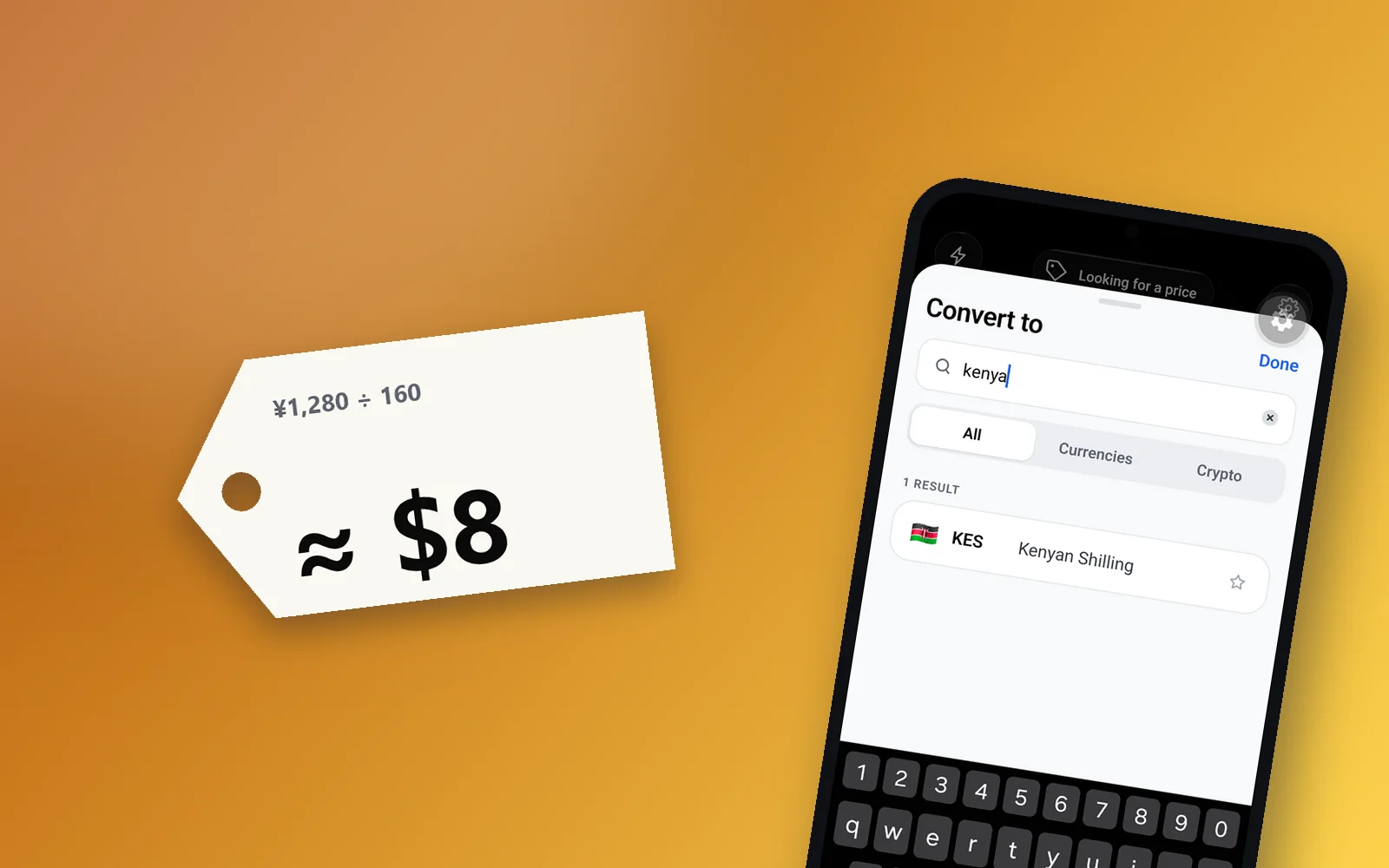
On the same day, 1 US dollar was about 159 Japanese yen. Round that to 160, and you get a simple rule: drop two zeros and take about two thirds.
- ¥1,280 → 12.8 → about $8.
- ¥3,000 → 30 → about $19.
- ¥500 → 5 → about $3.
Trick 3: learn one anchor price
Pick a single amount that equals a round number in your currency, and remember it.
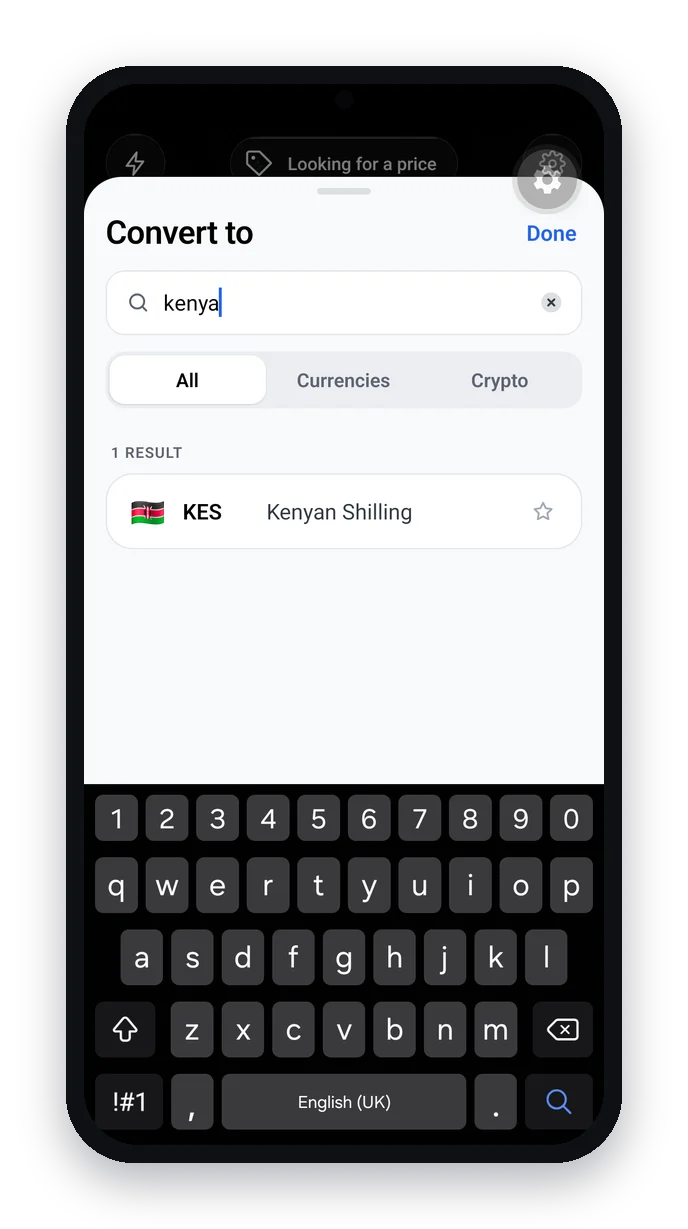
With 1 US dollar at about 130 Kenyan shillings, the anchor is "KSh 1,300 is $10". Everything else is a fraction or multiple of that:
- KSh 650 is about $5.
- KSh 450 is about $3.50.
- KSh 2,600 is about $20.
Anchors are especially useful in markets, where prices are written by hand and change from stall to stall.
Trick 4: halves and doubles
Some rates sit near 2 or 0.5. When a currency is roughly half or double yours, just halve or double the price, then nudge it a little in the right direction. It is surprisingly accurate for small purchases.
Trick 5: make a cheat sheet
Before you travel, write down five prices in your own currency, such as 1, 5, 10, 20 and 50, and their local equivalents. Keep the note on your phone's lock screen. Most purchases will be near one of those numbers.
When mental maths stops being good enough
Rounding errors grow with the price. A 5% shortcut doesn't matter on a coffee, but it matters on a jacket, a phone or a week's groceries. Rates also move, so a cheat sheet from last month can quietly drift.
For anything bigger than a snack, it is worth checking properly. Tagio reads the price tag through your camera and converts it at a rate that refreshes through the day, and it shows how fresh that rate is. If you're offline, it uses the last rate it downloaded and tells you its age.
Key points
- Round the rate to something easy, such as "add 10%" or "two thirds".
- For big-number currencies, drop the zeros first.
- Remember one anchor price, such as "KSh 1,300 is $10".
- Use exact conversions for larger purchases, because rounding errors grow with the price.
Example rates are Tagio reference rates on 26 November 2026, rounded. Rates change constantly.