The mid-market rate, explained: why your exchange rate never matches Google
- Written
- Read
- 3 min
- Words
- Tagio team
One currency, three different rates. Here is which one is real and how to get close to it.
Search for an exchange rate and you get one number. Change money at the airport and you get a different one. Pay by card and you get a third. They are all "the exchange rate", and only one of them is the real market price.
What the mid-market rate is
Banks and large financial institutions trade currencies with each other all day. At any moment there is a price at which they will buy a currency and a slightly higher price at which they will sell it. The mid-market rate is the point halfway between the two.
It is the closest thing to a "true" exchange rate. It is what you usually see on news sites and in search results, and it is the benchmark everyone else's rate is compared against.
Reference rates
Some institutions publish an official snapshot once a day. The best known is the euro reference rate from the European Central Bank, published on working days for around thirty currencies. Reference rates are useful for comparison and for contracts, but they are a snapshot. The market keeps moving after they are published.
Why you rarely get the mid-market rate
Anyone who sells you currency adds a margin, either inside the rate or as a separate fee:
- Exchange counters, especially at airports and tourist spots, often have the widest gap between the rate they offer and the market.
- Banks may use their own rate and add a foreign transaction fee to card payments.
- Card networks such as Visa and Mastercard set daily conversion rates close to the market. Your card issuer may add its own fee on top.
- Dynamic currency conversion at card terminals and ATMs, where you are offered your home currency, usually comes with a markup on the rate.
The difference may only be a few percent, but over a trip it adds up.
How to get close to the market rate
- Pay by card in the local currency, and decline any offer to be charged in your own currency.
- Use a card with no foreign transaction fee.
- Withdraw cash from a bank ATM rather than changing notes at a kiosk, and decline the ATM's conversion.
- Compare any rate you are offered with the mid-market rate. The gap is the real cost.
How Tagio uses rates
Tagio converts prices with market rates that refresh through the day, and it always shows how old they are. If you have no connection, it uses the last rates it downloaded and labels them with their age, so an old rate is never shown as live.
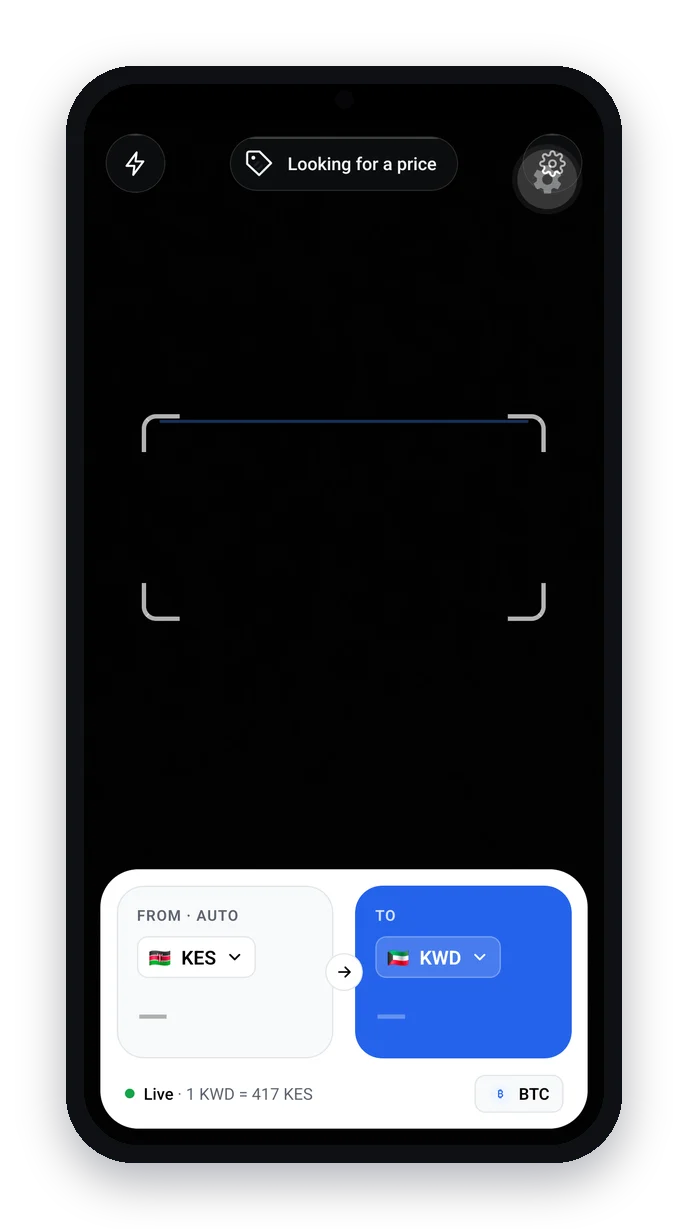
It is worth knowing what that number means. Tagio shows you what a price is worth at the market rate. The amount your bank finally charges can be slightly different, depending on your card's own rate and fees. Treat the converted price as a reliable guide to value, and check your card's terms for the exact cost.
Key points
- The mid-market rate is the midpoint between buy and sell prices on the wholesale market.
- Reference rates, such as the ECB's, are daily snapshots.
- Most providers add a margin, inside the rate or as a fee.
- Paying in local currency with a no-fee card gets you closest to the market rate.