How to read price tags abroad: decimal commas, raised cents and other surprises
- Written
- Read
- 3 min
- Words
- Tagio team
Every country writes prices a little differently. Here is how to read them at a glance.
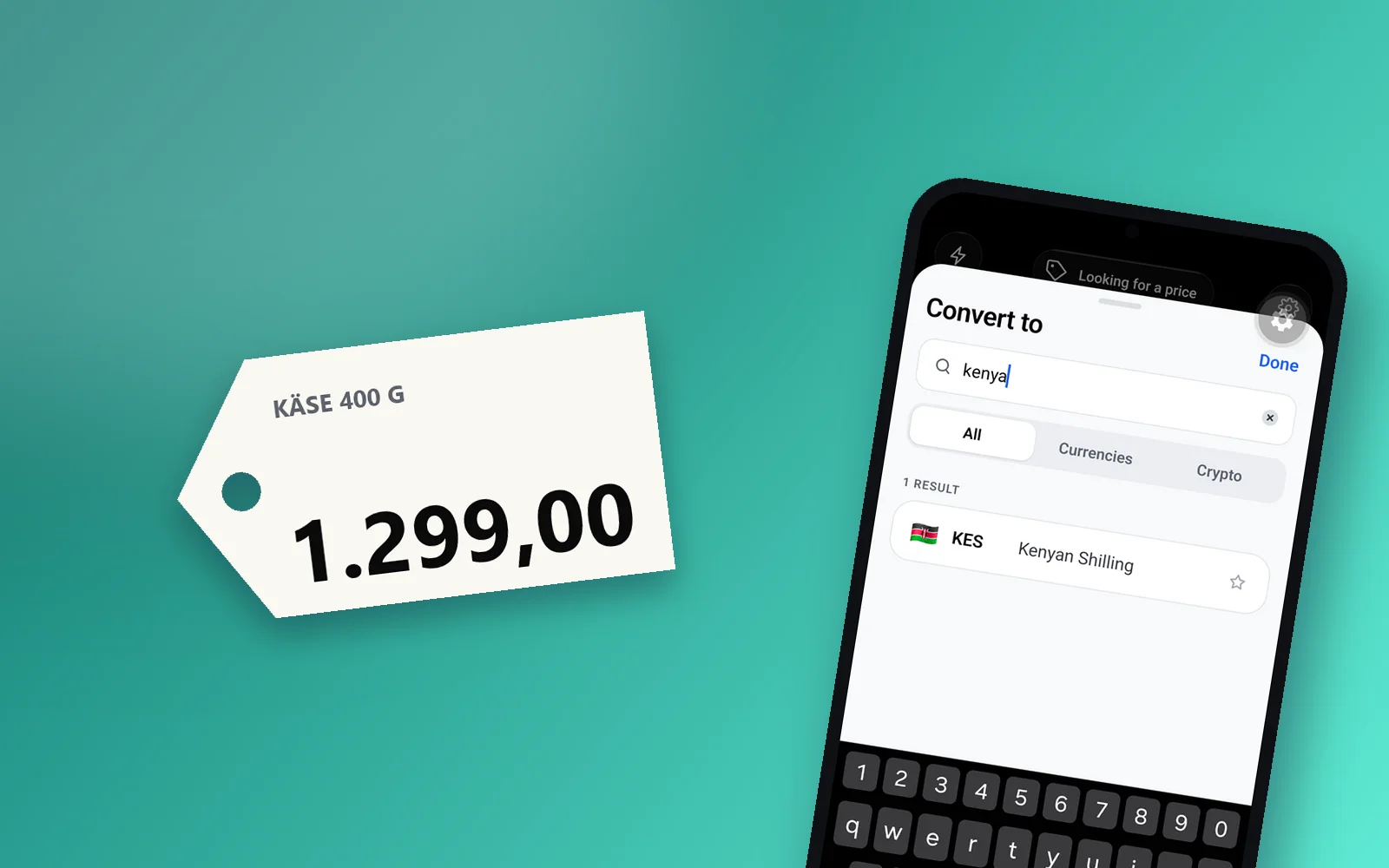
You see "1.299" on a price tag in Berlin and pause. Is that one euro and change, or over a thousand? Price formats change from country to country, and the differences are small enough to miss and big enough to matter.
Decimal points and decimal commas
The biggest trap is the separator. Countries split into two main habits:
| Written as | Means | Common in |
|---|---|---|
| 1,299.00 | one thousand two hundred and ninety-nine | United States, United Kingdom, Kenya, Australia, Japan |
| 1.299,00 | the same amount | Germany, Italy, Spain, the Netherlands, Brazil, Indonesia |
| 1 299,00 | the same amount, with a space | France, Sweden, Norway, Poland, the Czech Republic |
| 1'299.00 | the same amount, with an apostrophe | Switzerland and Liechtenstein |
So "3,49 €" in Paris is three euros forty-nine, not three thousand. The quickest check is to look at what comes after the last separator. Two digits are almost always cents. Three digits are almost always thousands.
Raised cents and cent signs
In shops in North America, the UK and elsewhere, cents are often printed small and raised: $4⁹⁹ is $4.99, and £0.⁹⁹ is 99 pence. Small prices may use a cent sign instead, as in 99¢, which means $0.99, not $99.
Lakhs and crores
In India, large numbers are grouped differently: ₹1,00,000 is one lakh, or one hundred thousand rupees, and ₹1,00,00,000 is one crore, ten million. The digits are the same; only the commas move.
"/-" after a price
In Kenya, Uganda, Tanzania and other countries, you will often see prices like 450/- or KSh 450/-. The slash and dash mean "whole shillings, nothing after". It is not a fraction.
Currencies without small change
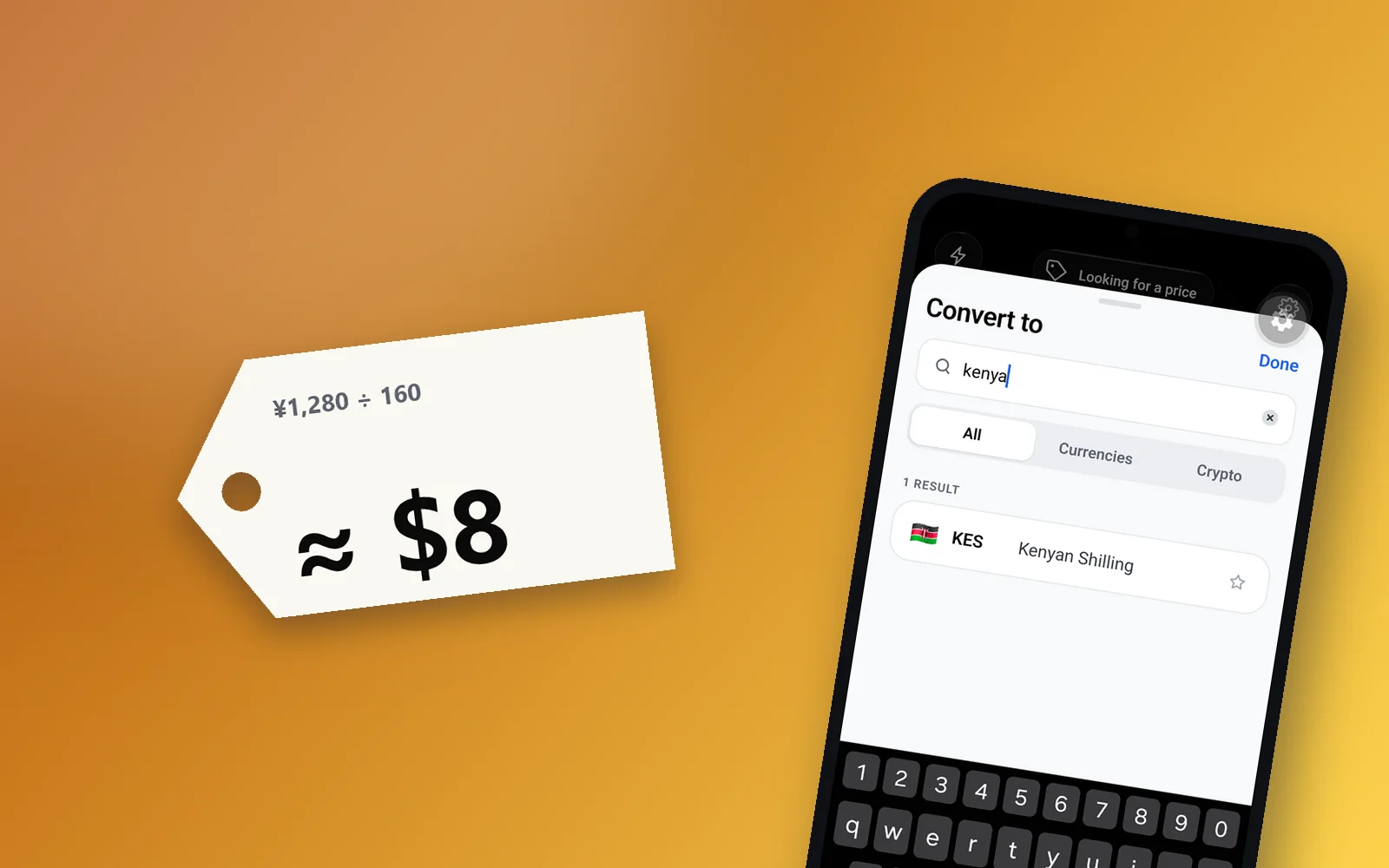
Some currencies are almost never written with decimals. Japanese yen and Korean won have no minor unit in everyday use, so ¥1,280 is simply one thousand two hundred and eighty yen. Other currencies, such as the Kuwaiti dinar, use three decimal places.
One symbol, many currencies
The $ sign is used by the US, Canadian, Australian, New Zealand, Singapore and Hong Kong dollars, and by the Mexican peso, among others. kr can mean Swedish, Norwegian, Danish or Icelandic krona. Sh can be a Kenyan, Tanzanian or Ugandan shilling.
Tags in tourist areas often add a code to remove doubt: AUD $8.50, US$ 15, C$ 12. If there is no code, the country you are in is almost always the answer.
Is tax included?
This varies more than people expect:
- Included: across the EU and the UK (VAT), in Australia and New Zealand (GST), and in Japan, where shops must show the tax-inclusive total.
- Usually not included: in the United States and Canada, where sales tax is added at the till and the rate depends on the state, province or city.
If the total at the till is higher than the shelf price in the US or Canada, that is usually why.
Unit prices and "was" prices
Shelf labels often show two or three numbers: the price, a price per kilo or litre, and sometimes an old "was" price. The large number is normally what you pay. The small "per kg" figure is for comparing products.
Let your phone do the reading
All of this is easy once you know it, and tiring after a long day of shopping. Tagio reads these formats for you: decimal commas, spaces, raised cents, cent signs, "/-" and currency codes. Point the camera at the tag and the price appears in your currency. It skips weights, dates and barcodes, and when a symbol like "$" is shared, it uses the country you are in.
Key points
- Two digits after the last separator are cents; three are thousands.
- 1.299,00 and 1,299.00 are the same amount.
- $4⁹⁹ is $4.99, 99¢ is $0.99, and 450/- is 450 whole shillings.
- Prices include tax in the EU, UK, Australia and Japan, but usually not in the US or Canada.